This $30 Tool Just Ended the 100-Year Reign of the Bubble Level—And Big Tool Brands Are Furious

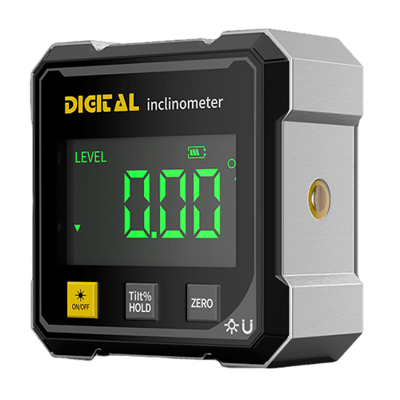
The Digital Laser Angle Finder is the first aerospace-grade measuring tool designed for weekend warriors and pro woodworkers alike. For thousands of DIYers and tradespeople, the era of squinting at crooked bubble levels—and wasting expensive lumber on "almost perfect" cuts—is officially over.
Here’s a statistic that’ll make your wallet hurt: The average DIY woodworker wastes over $847 per year on miscut materials due to inaccurate angle measurements.
That’s according to a 2023 Home Improvement Industry study. And it gets worse—47% of those cuts were “off” by less than 2 degrees. Two degrees. The kind of error you can’t see with your naked eye… until you try to fit the piece and realize there’s a gap you could slide a quarter through.
If you’ve ever tried to build a picture frame, hang floating shelves, or set a miter saw to exactly 45°, you know the frustration. You line up the bubble in your spirit level. It looks centered. You make the cut. You bring the piece inside… and it doesn’t fit.
Why? Because traditional bubble levels have a dirty little secret.
The “Parallax Trap” That’s Been Fooling You for Decades
Here’s what the big tool companies don’t advertise on the box:
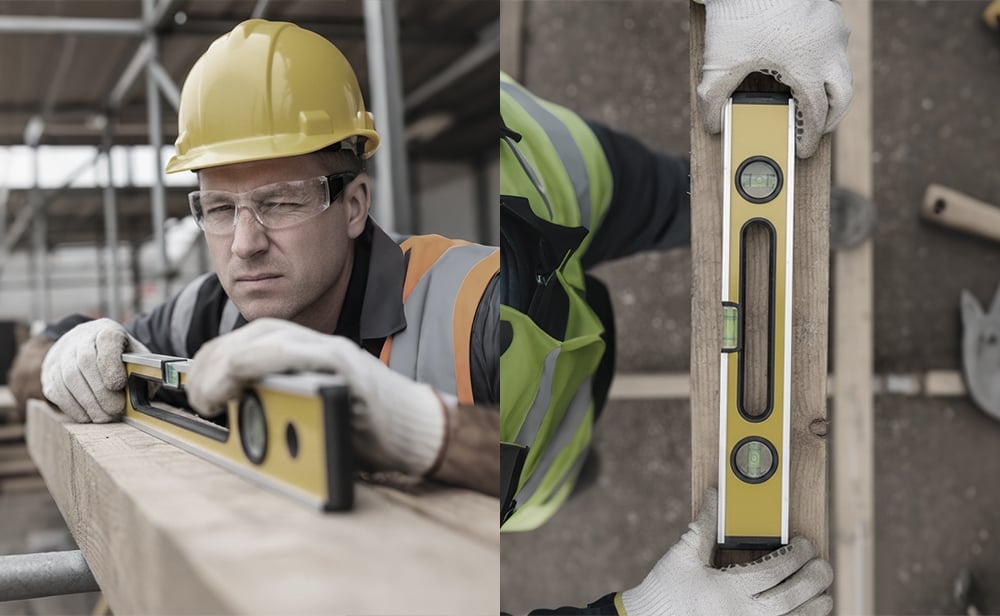
Bubble levels rely on fluid physics and your eye’s interpretation. To read one accurately, you must view it from dead center—perpendicular to the vial. If your eye is even 5 degrees off-axis (which happens every time you’re working overhead, under a sink, or at an awkward angle), you experience Parallax Error.
The bubble looks centered when it’s actually tilted by 0.5 to 1 degree.
And here’s the kicker: 0.5 degrees of error compounds over distance. On a 4-foot board, a 1-degree miscalibration at the saw creates a 1-inch gap at the joint. On an 8-foot shelf? That “perfectly level” installation ends up with one side drooping like a sad smile.
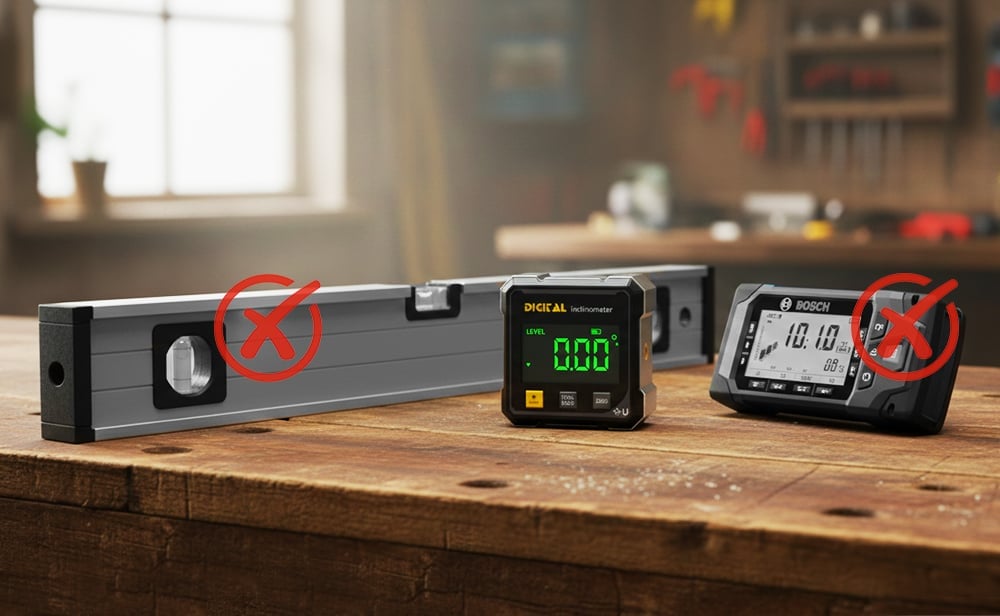
Carpenters have known this for decades. That’s why master craftsmen use $600+ digital levels from brands like Bosch and Stabila—tools that measure angles electronically, eliminating human guessing.
But what if you could get that same digital precision… for under $32?
The Arizona Startup That Cracked the Code (And Made Big Tool Very Nervous)
Enter this one, a scrappy engineering team that asked a simple question:
“Why are we still using 19th-century bubble technology when smartphones have had accelerometers for 15 years?”
Their answer? The Digital Laser Angle Finder Protractor—a pocket-sized tool that uses the same MEMS (Micro-Electro-Mechanical Systems) sensors found in aircraft navigation systems to measure angles with mathematical precision.
Translation: It doesn’t “guess” if something is level. It calculates the exact angle to the hundredth of a degree by detecting gravity’s pull on a microscopic scale.
And because it fits in your hand, sticks magnetically to any metal surface (saw blades, pipe, steel beams), and costs $30… it’s become Big Tool’s worst nightmare.
What Exactly Is This Thing?
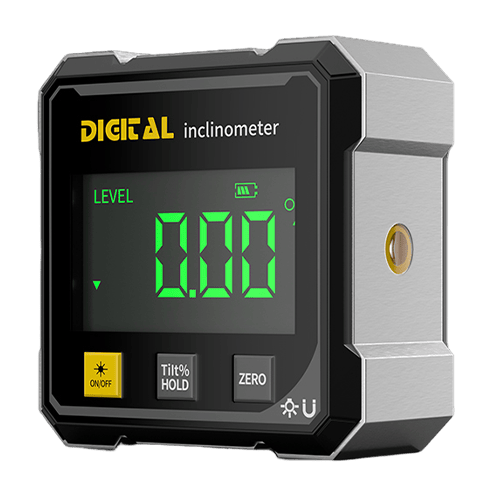
The Digital Laser Angle Finder is a 2.4-inch cube with four superpowers:
1. 360° MEMS Gyro Measurement
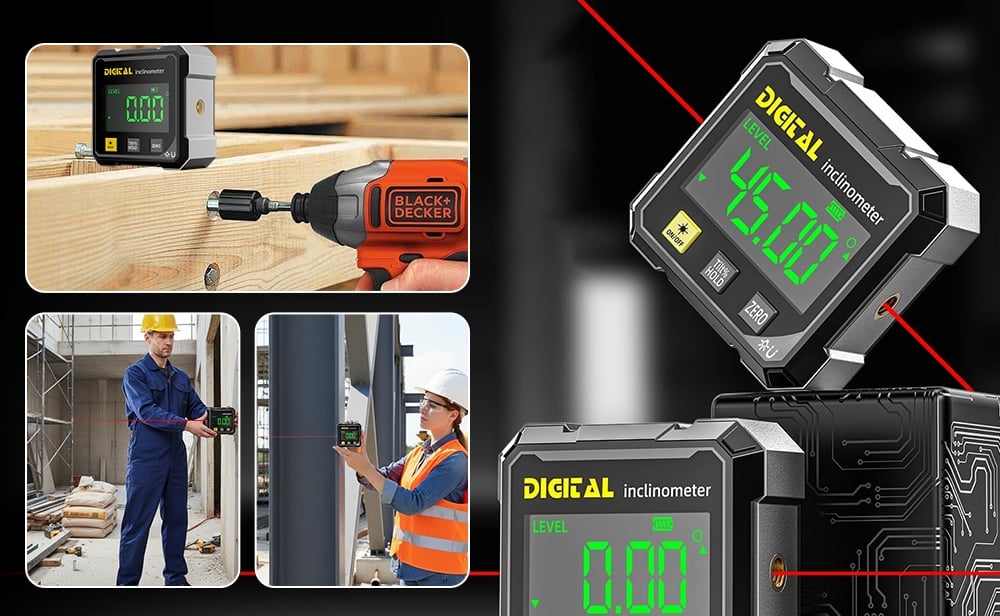
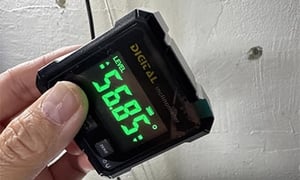
Unlike bubble levels that only tell you “level or not level,” this tool measures any angle in a full 360° rotation. Calibrating a table saw to exactly 22.5° for an octagon? Done. Checking if a welding jig is precisely 135°? Instant readout.
2. Quad-Magnetic “Gravity Lock” Base
Here’s where it gets genius: All four sides have powerful neodymium magnets. You can stick it to a saw blade, a metal stud, a conduit pipe—in any orientation—and it won’t budge. Totally hands-free. No more holding a level with one hand, a pencil with the other, and trying to mark a line with your teeth.
3. Sunlight-Readable LED Display
Ever tried to read a digital screen outdoors at noon? Most LCD displays turn into useless black squares. uses a high-contrast LED backlit display that’s visible even in direct sunlight—and in pitch-black crawl spaces. No more squinting. No more guessing.
4. Built-In Laser Extension
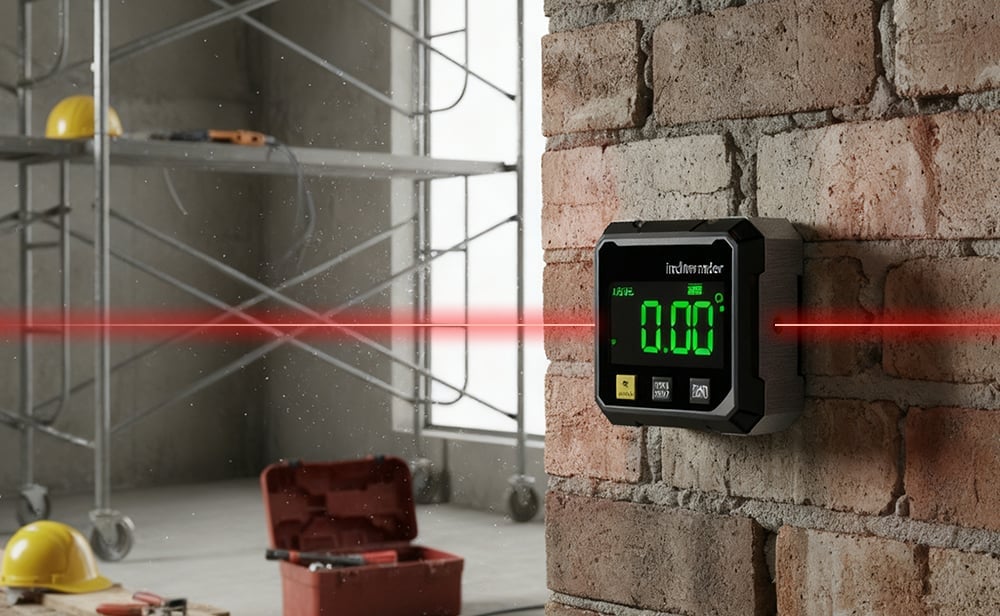
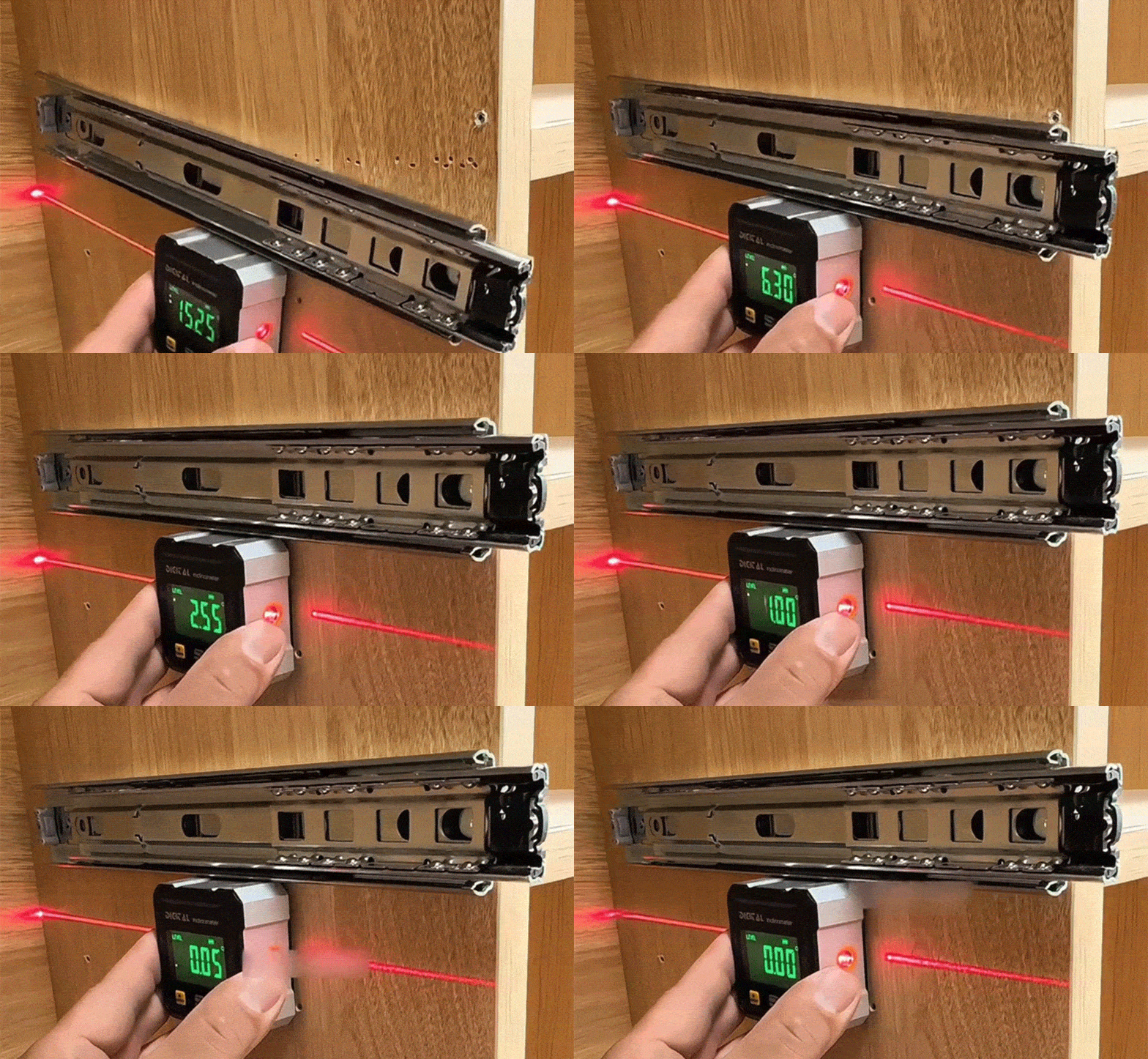
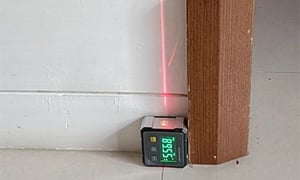
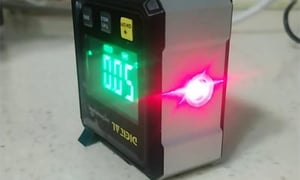
Need to project a level line across a 10-foot wall to hang a gallery? Press the laser button. A red beam shoots out, giving you a visual reference line. It’s like having a $200 laser level built into your angle finder.

Why the “Big Tool Racket” Doesn’t Want You to Know About This
Here’s the uncomfortable truth the major brands don’t talk about:
You’re paying for their Super Bowl ads, not better technology.
A Bosch or Stabila digital level costs $600+ not because the internal MEMS sensor is expensive (it’s the same $3 chip used in your smartphone), but because you’re subsidizing their retail distribution networks, celebrity endorsements, and massive marketing budgets.
They sell direct online. No middlemen. No TV commercials. Just engineers who built a tool they’d actually want to use—and priced it like humans, not corporations, would use it.
The result: A tool with specs that rival the $600 giants… for the price of a decent pizza.
And yes, the big brands are furious. Industry insiders report that it has been quietly blocked from major retail chains like Home Depot and Lowe’s. Why? Because if customers realized they could get pro-grade precision for $30, it would obliterate the market for $600 levels.
Good thing the internet exists.
The 3-Second Test That Proves It Works
I tested the against my contractor-grade Bosch inclinometer (the $649 model). Here’s what happened:
Test 1: Table Saw Calibration
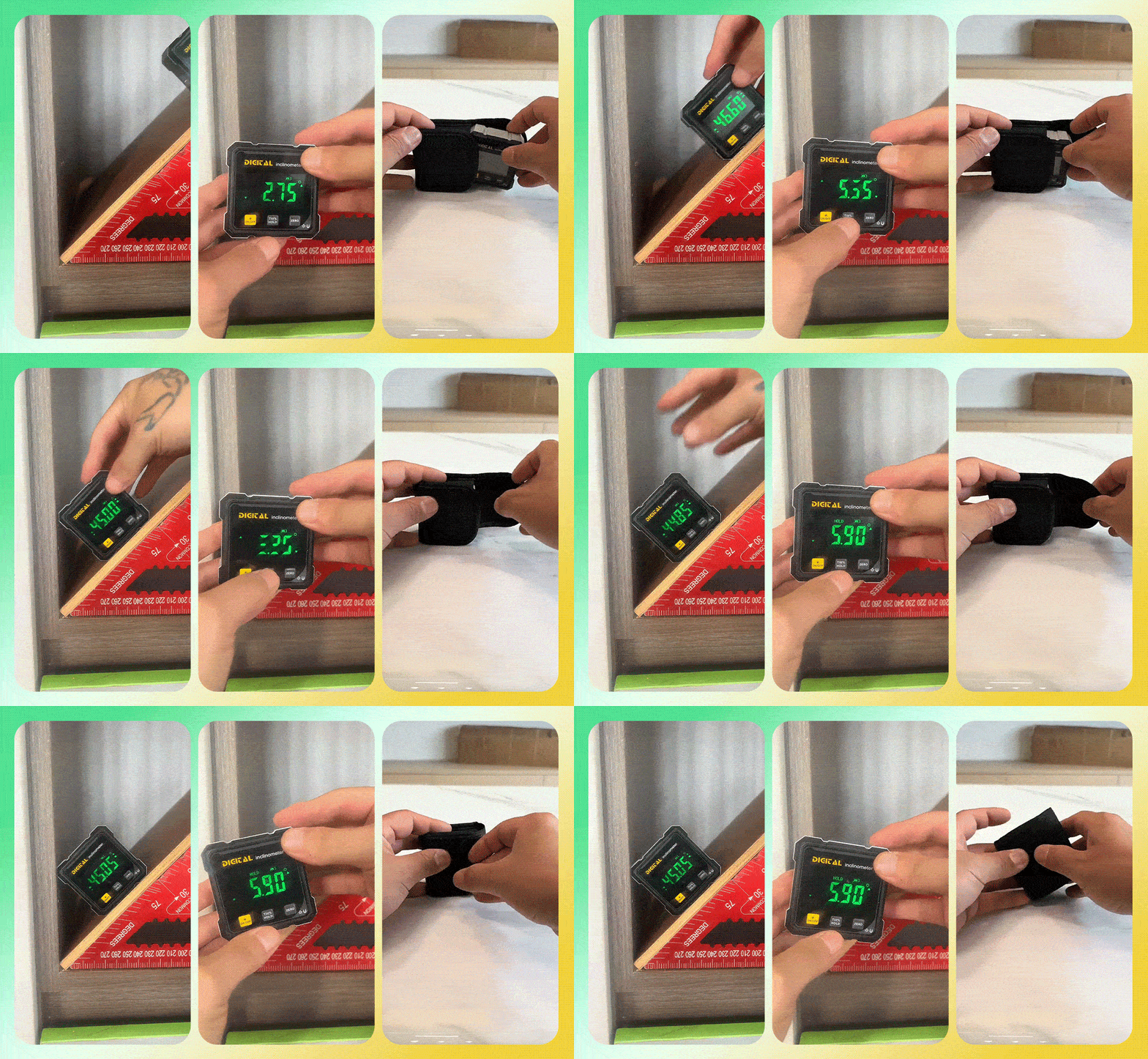
I set my saw blade to what looked like 90° using my old combination square. reading: 89.2°. I adjusted. locked in at 90.00°. Made a test cut. Perfect right angle. Zero gap in the joint.
Test 2: Overhead Shelf Installation
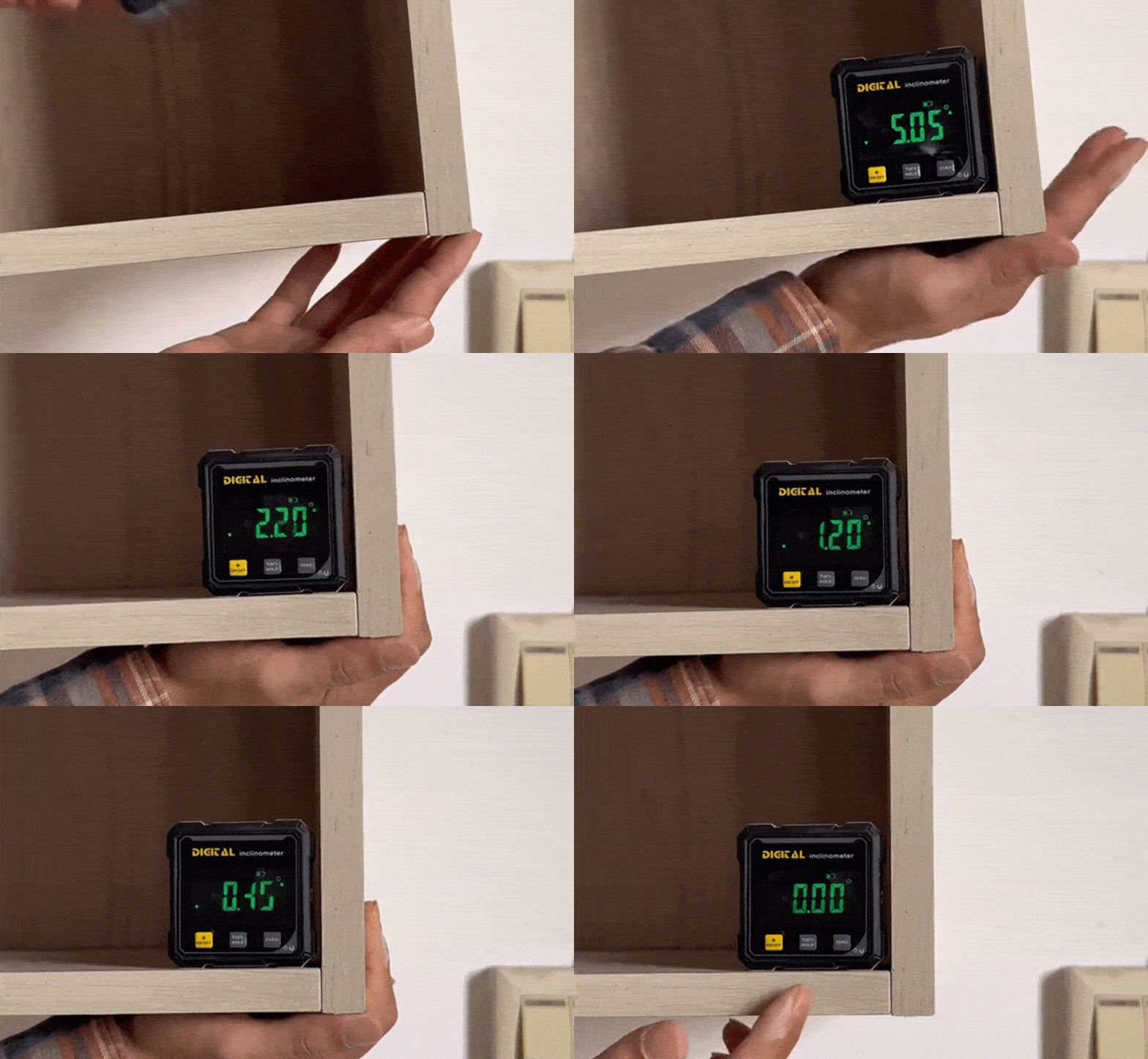
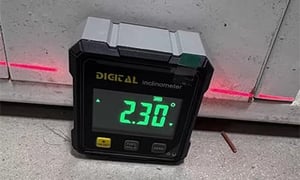
Tried to level a floating shelf using my bubble level. Looked good. Drilled the holes. Hung the shelf. One end was 3/4 inch higher than the other. Grabbed the , stuck it magnetically to the shelf bracket. Reading: 1.8° off. Adjusted. Laser line projected across the wall. Re-drilled. Perfect.
Test 3: Sunlight Readability
Took both tools into my driveway at noon. Bosch screen? Completely washed out. LED? Bright green, readable from 10 feet away.
The Bosch is a great tool. But I’m not hauling a $649 device to a jobsite where it might get dropped in sawdust or stolen from my truck. The ? I keep it in my pocket. And if I lose it, I’m out 32 bucks, not a car payment.
Real Users Are Calling It a “Cheat Code for Carpentry”
Jake M., Professional Woodworker
“I’ve wasted so much expensive walnut on miter cuts that were ‘close enough.’ This tool paid for itself the first weekend. Now my clients ask how I get joints so tight you can’t slide a razor blade in.”
Linda R., DIY Home Renovator
“I’m not handy. At all. But I wanted to hang my own shelves without calling my ex-husband. The magnetic grip and instant numbers made me look like I knew what I was doing. My friends think I hired a pro!”
Tony D., Welder
“We use this to set angles on structural steel before tacking. Beats eyeballing with a protractor and way faster than a torpedo level. Foreman asked where I got it. Ordered three more for the crew.”
Over 25,000 units sold in 8 months—with zero retail shelf presence. That’s purely word-of-mouth and people posting their results on woodworking forums.
How It Actually Works (In 3 Steps That Take 32 Seconds)
Step 1: Unbox & Power On
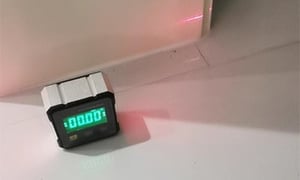
Press and hold the power button for 2 seconds. The LED display lights up showing “0.00.” That’s it. No calibration. No setup. (It arrives 80% charged via built-in USB rechargeable battery.)
Step 2: Attach to Surface
Slap it magnetically onto your saw blade, pipe, stud, or workpiece. All four sides are magnetic, so orientation doesn’t matter. It locks on and stays put—even if you’re cutting or the surface is vibrating.
Step 3: Zero and Measure
Press the ZERO button to set your reference angle. Now rotate the blade/pipe/whatever. The display updates in real-time, showing you exactly how far off you are from your target. Adjust until it reads your desired number. Done.
Bonus: Want to project a level line? Press the laser button. A red beam extends your measurement across the room.

The One Question Everyone Asks: “Why Is It So Cheap?”
Fair question. If this tool performs like a $600 level, why does it cost $30?
Three reasons:
1. Direct-to-Consumer Model: sells online only. No retail middlemen taking 40% cuts.
2. Bulk MEMS Sourcing: They buy the same accelerometer chips smartphone manufacturers use—at scale—for pennies.
3. Word-of-Mouth Marketing: Instead of paying for Super Bowl ads, they offer steep discounts to early adopters who post reviews. (That’s why the 50% off sale exists.)
The big brands could make a tool like this. They just won’t—because it would cannibalize their $600 product lines.
But Does It Actually Save You Money?
Let’s do the math:
Scenario 1: The Weekend Woodworker
You’re building a bookshelf. Hardwood costs $8/board foot. You miscut one board because your miter saw was off by 1.5°. That’s $40 wasted. With , you calibrate the saw in 10 seconds. Zero waste. Tool pays for itself in one project.
Scenario 2: The DIY Renovator
You want to hang three floating shelves. Handyman quote: $180. You try it yourself with a bubble level. One shelf ends up crooked. You re-drill, patch holes, re-paint. 4 hours wasted. With : Magnetically attach to bracket, use laser to mark wall, drill once. Done in 32 minutes.
Scenario 3: The Professional Tradesperson
You’re a welder setting up structural angles on a bridge repair. Specs call for 128° bends. You’re currently using a protractor and eyeballing it. Each re-weld costs 20 minutes. gives you the exact angle instantly. Over a month, you save 6+ hours. That’s billable time.
At $32, this tool pays for itself faster than any other in your box.
What Makes This Different from Every Other “Digital Level”?
Perfect for carpentry, metalworking, construction, home DIY, and any task that demands true precision.
Ours
| ✅ Dual-laser precision for fast, accurate alignment |
| ✅ 4×90° full-range measurement with high-accuracy sensors |
| ✅ Large LED display readable indoors & outdoors |
| ✅ Full-body magnetic base for hands-free multi-angle work |
| ✅ USB rechargeable battery with auto shut-off |
| ✅ Rugged housing designed for jobsite durability |
Competitors
| ❌ Inconsistent measurements and drifting accuracy |
| ❌ Limited angle range—can't handle complex tasks |
| ❌ Dim displays hard to read in bright environments |
| ❌ Weak or no magnets—constantly slipping |
| ❌ Requires disposable batteries with short lifespan |
| ❌ Fragile casing that cracks or fails easily |

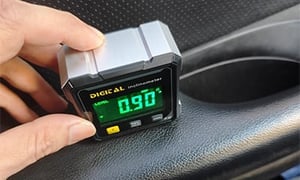
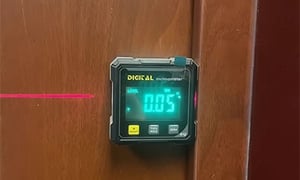
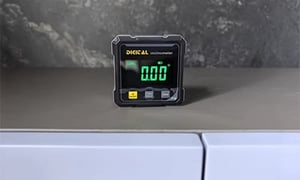
“I was about to hire a contractor to install floating shelves in my living room. He quoted $450. I bought the for $30, watched one YouTube video, and did it myself in two hours. The shelves are perfectly level—I used the laser to mark the wall, and the digital readout to confirm the brackets. My wife thought I hired someone. Best $32 I’ve ever spent.”


Verified Purchase


We Offer a 100%
Satisfaction Guarantee...
You can try this Dual-Laser Digital Angle Finder completely risk-free.
If you're not satisfied with your purchase, we’ll refund you—every single penny, no questions asked, no hassle.
We make this promise because our team has spent years refining the accuracy, durability, and ease of use of this tool.
From reinforced construction to precise sensors and rigorous third-party testing, every detail has been perfected to ensure you get a measuring tool that truly delivers professional results.
Why I’m Telling You This (And Why I Bought Three)
Look, I’m not a employee. I’m a guy who’s ruined expensive wood, drilled crooked holes, and spent 20 minutes trying to interpret a bubble that looked centered but wasn’t.
I bought my first on a whim after seeing a Reddit thread in r/woodworking. Changed my workflow completely. So I bought two more—one for my truck, one as a gift for my dad (a retired machinist who immediately texted “Where has this been all my life?”).
Here’s my honest take:
If you only use a level twice a year to hang a picture frame, stick with your $10 bubble level.
But if you:
· Build furniture or do finish carpentry
· Install shelves, cabinets, or tile
· Weld, plumb, or work with metal
· Set saw blades, drill presses, or machinery
· Are tired of “close enough” results
…then spending $30 on a tool that guarantees perfect angles is the easiest upgrade you’ll ever make.
Worst case? You hate it. Send it back within 90 days for a full refund (company policy). Best case? You never ruin another cut, and your projects start looking like they came from a high-end shop.
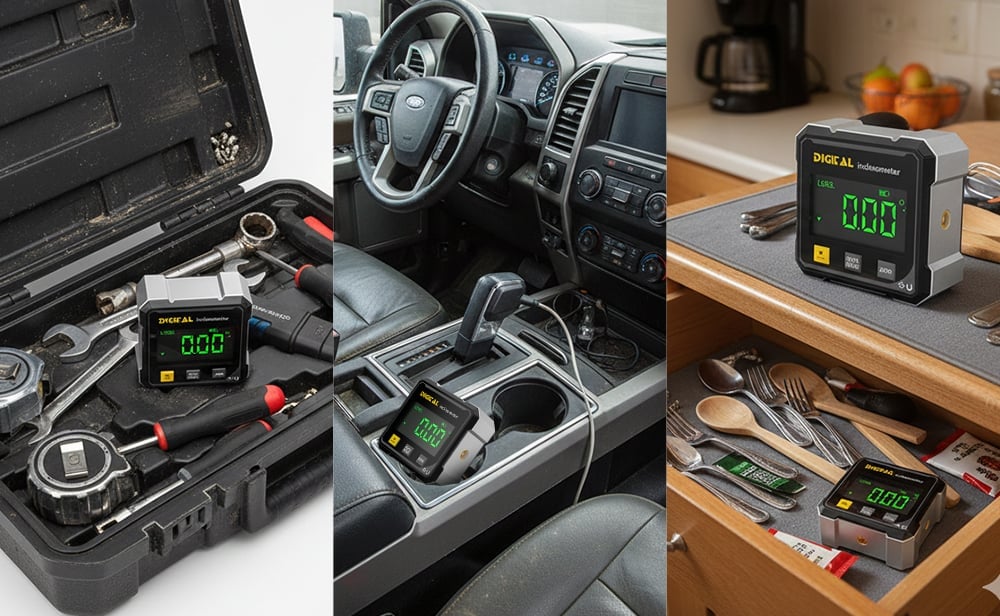
Final Thought: This Is What “Disruption” Actually Looks Like
Every few years, a tool comes along that makes you wonder why you tolerated the old way for so long.
For me, it was the Kreg Jig (pocket hole screws that eliminated wobbly furniture).
For my dad, it was the cordless drill (no more extension cords).
The ® Digital Angle Finder is that tool for precision measurement.
It’s not flashy. It’s not advertised on TV. But it solves a 100-year-old problem (bubble parallax error) with 21st-century tech (MEMS sensors + magnetic grip + laser projection)… for less than the cost of a single sheet of plywood.
Big Tool doesn’t want you to know about it. But 25,000 woodworkers, welders, and DIYers already do.
Now you do too.

90-Day Money Back Guarantee

Guaranteed Safe and Secure Checkout

Fast Shipping

No-Hassle Returns
Frequently Asked Questions
Q: Is the magnetic grip strong enough for heavy-duty use?
A: Yes. The neodymium magnets hold 8+ lbs of force per side. I’ve attached it to a running table saw blade (vibrating) and a steel I-beam on a construction site. Didn’t budge.
Q: What if I drop it?
A: The outer shell is impact-resistant ABS plastic (same material used in hard hats). I’ve dropped mine from waist height onto concrete twice. Still works perfectly.
Q: Can I use it on non-metal surfaces?
A: Absolutely. If the surface isn’t magnetic, just set it on top. The flat base is stable on wood, plastic, glass, etc. The magnets are a bonus, not a requirement.
Q: How long does the battery last?
A: 4–6 hours of continuous use. Auto-shutoff kicks in after 3 minutes of inactivity, so realistically, you’ll get weeks of intermittent use per charge. Recharges via standard micro-USB in 2 hours.